
How to Plug a Tire in 3–10 Minutes (Car, Off-Road & Motorcycle Tires)
Last updated:
Turn the puncture to the top of the tire, ream the hole with the Spiral Probe, open it with the Pilot Tool, push a plug in with the Plug Insert Tool, trim it, inflate and check for leaks with soapy water. It takes about 7–10 minutes on a car or off-road tire, and about 3–4 minutes on a motorcycle or scooter tire.
A nail in the tire on the trail or on the way to work doesn't have to end your day. If the hole is in the tread and not too big, you can plug it yourself and keep driving on the same tire, no spare needed. In this guide we plug a thick 32" off-road tire, step by step, with photos and a video. The user in the video is 170 cm (5'7") tall and weighs 65 kg (143 lb): no special strength is needed.
Can This Puncture Be Plugged?
Check this first. Following the tire industry's repair guidelines (USTMA), a plug is only for small holes in the tread:
- Yes: a nail, screw or similar hole up to about 6 mm (1/4 in) in the tread, the part of the tire that touches the ground.
- No: anything in the sidewall or the shoulder (the curved edge between tread and sidewall).
- No: cuts, tears and holes larger than about 6 mm (1/4 in).
- No: a tire that has been driven flat for a long distance; the inside may be damaged even if it looks fine from outside.
- No: solid tires and tires with an inner tube, including most small stand-up e-scooter tires. Plugs only work in tubeless tires.
Why not the sidewall? It flexes with every turn of the wheel and has no steel belt to grip the plug. A plug there works loose, and the tire can fail suddenly. Sidewall damage needs a tire shop or a new tire.
Other ways to fix a flat, from sealant and screw-in plugs to a permanent repair from the inside, are compared in Flat Tire Repair Options.
What You Need
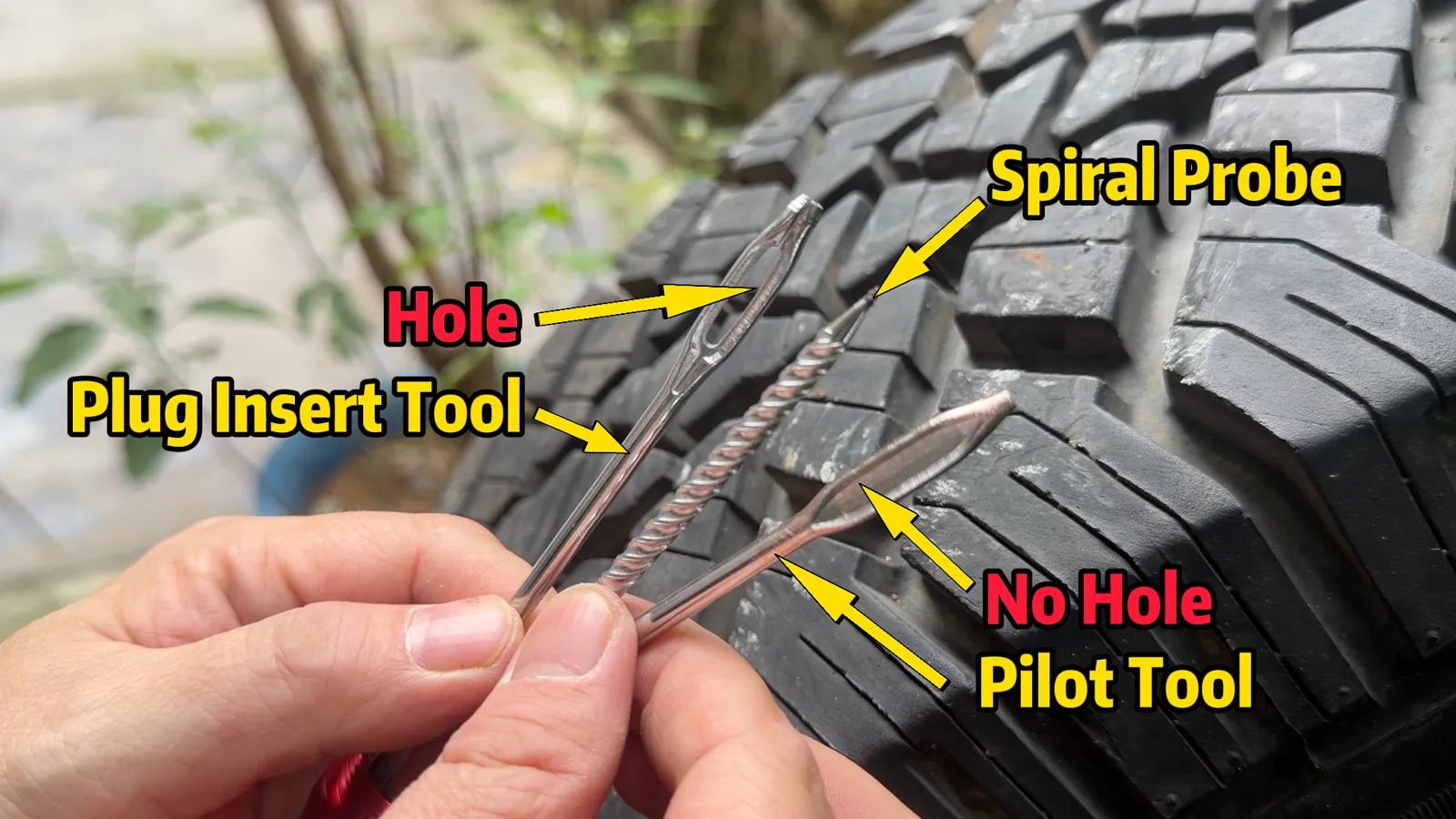
- Spiral Probe: a spiral rasp that reams the hole, cleaning it and opening a path through the tire.
- Pilot Tool: same shape as the insert tool but without the eye. It opens and stretches the hole before the plug goes in, so the plug slides in instead of being pushed against a tight hole.
- Plug Insert Tool: has an open eye that holds the plug while you push it in.
- Tire plugs (the sticky brown strings).
- A 12 V compressor or pump, soapy water in a small bottle, and eye protection.
Why three tools and not two? Many people find reaming the hole the hardest part, especially on thick car and off-road tires. After the first pass with the Spiral Probe, the Pilot Tool opens the hole a little, so the Spiral Probe then goes in and out much more easily. Before you insert the plug, the Pilot Tool also tells you whether the hole is ready: if it goes all the way in, the plug will too. It is the same size as the Plug Insert Tool and has no cutting edge, so it only stretches the rubber, which springs back, and doesn't make the hole bigger.
Step by Step: Car, SUV and Off-Road Tires
Leave some air in the tire if you can. A flat tire gives way when you press on it, which makes every step harder.
Step 1: Position the tire
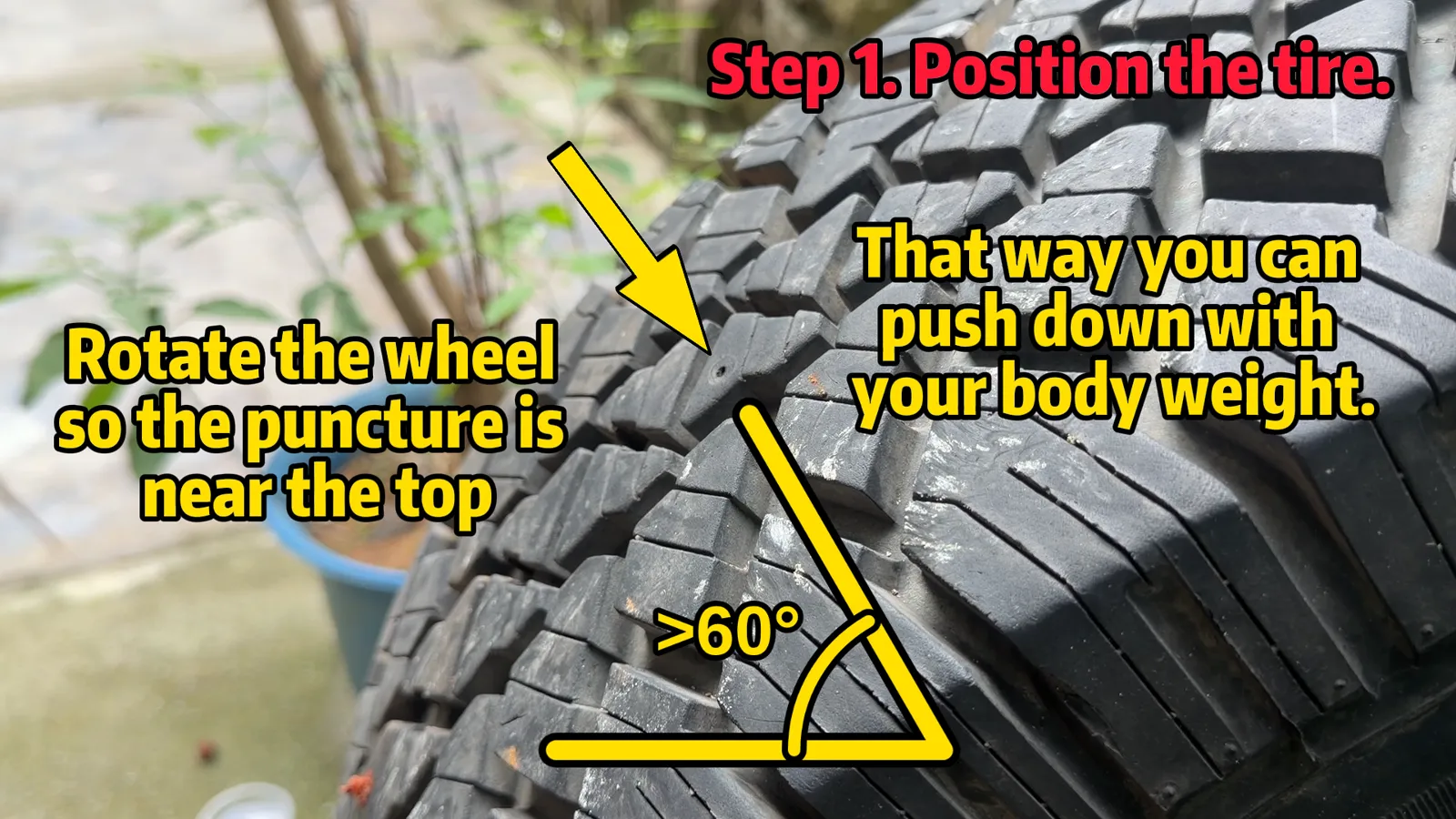
Remove the nail or screw first (pliers help). Then rotate the wheel so the puncture is near the top, between the 11 and 1 o'clock positions (at least 60° above horizontal). Now you push down with your body weight instead of only your arms, which makes a big difference on thick tires. If it's a rear tire, you may need to take the wheel off to do the repair.
Step 2: Ream the hole with the Spiral Probe
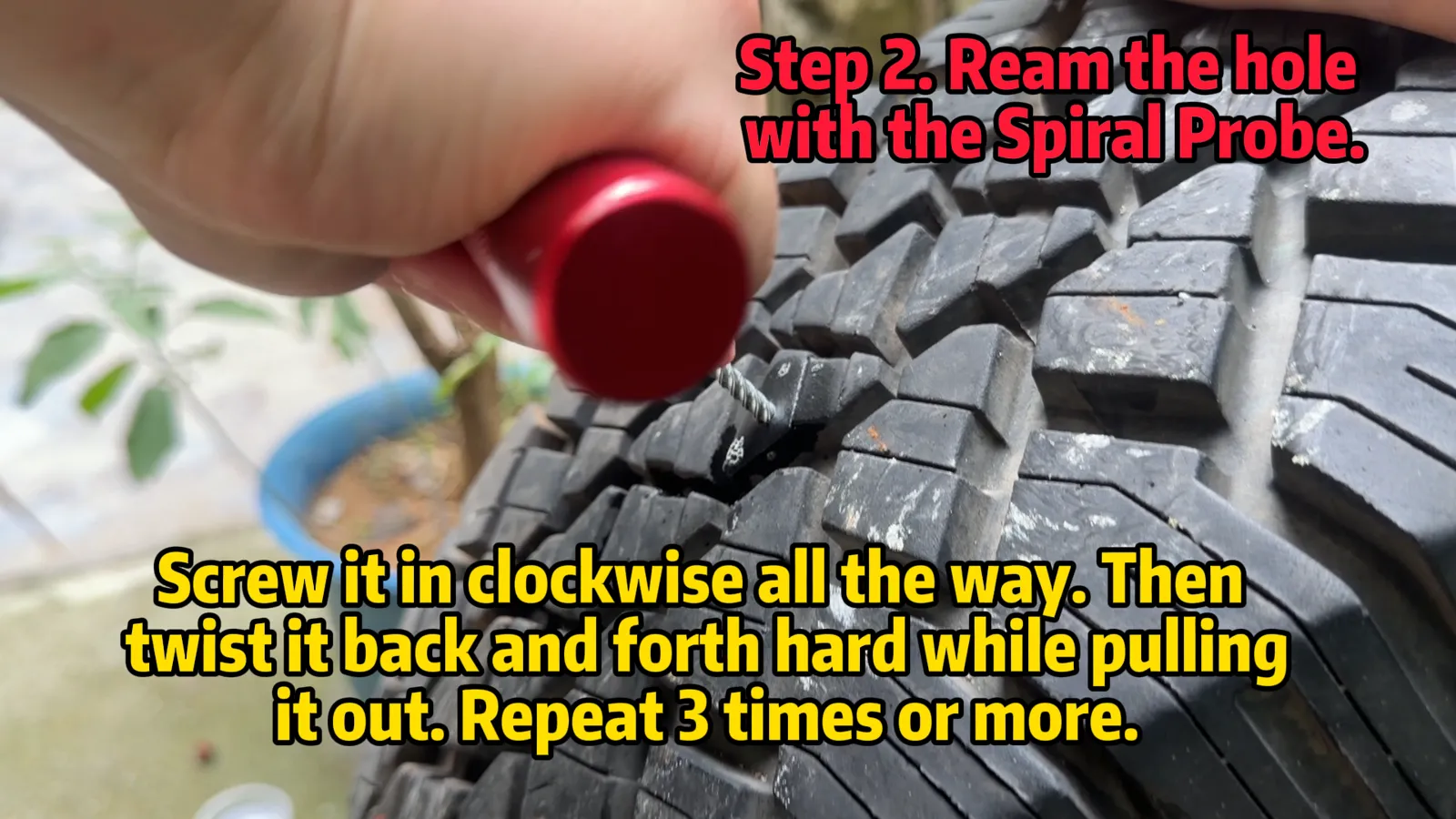
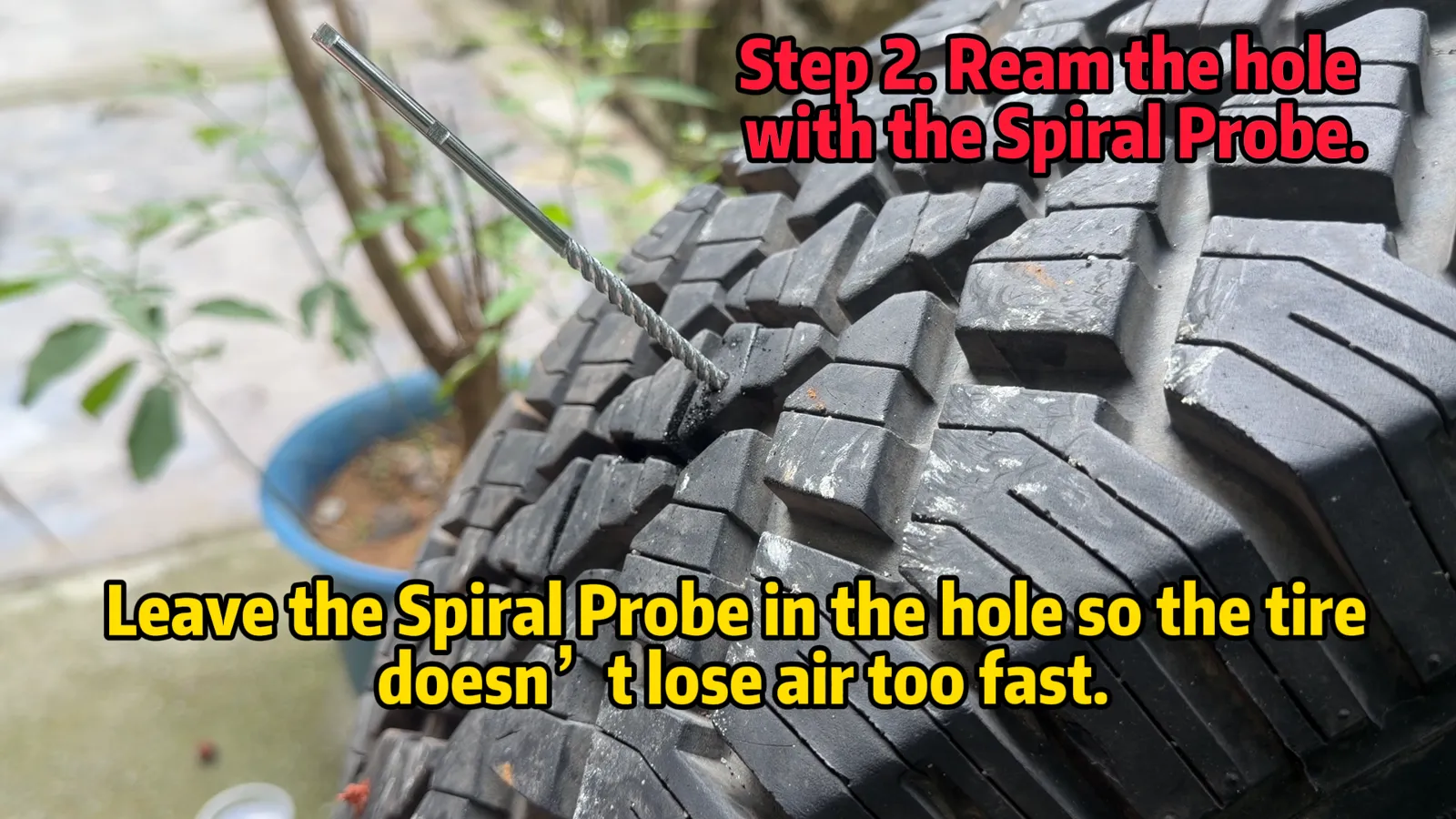
Screw the Spiral Probe in clockwise all the way. Then twist it back and forth hard while pulling it out. Repeat 3 times or more. This drills through the hole and rasps it clean. When you're done, leave the Spiral Probe in the hole so the tire doesn't lose air too fast.
Step 3: Open the hole with the Pilot Tool
Pull out the Spiral Probe and twist the Pilot Tool in all the way. Then twist it back out until only the tip is left in the hole.
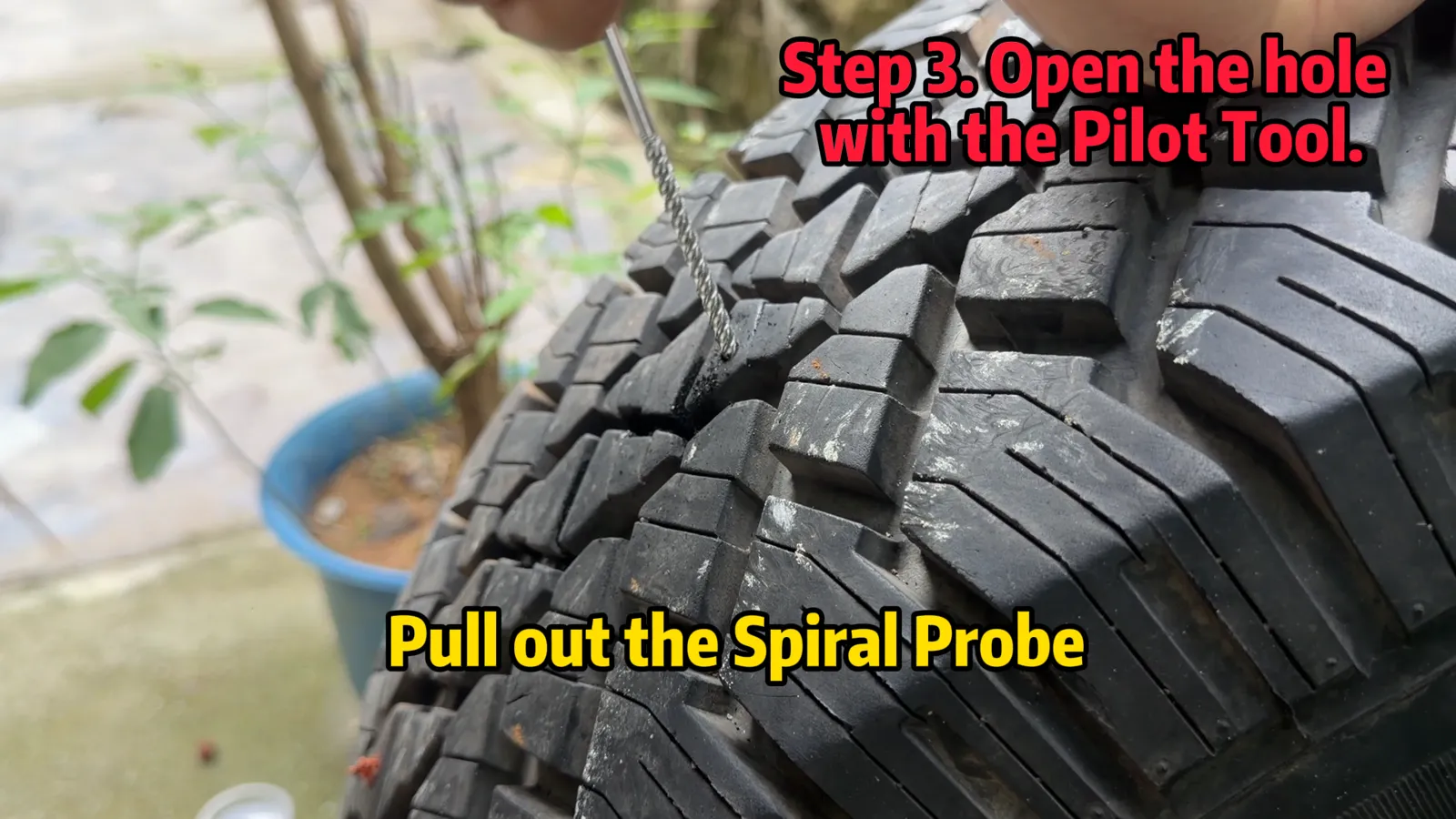
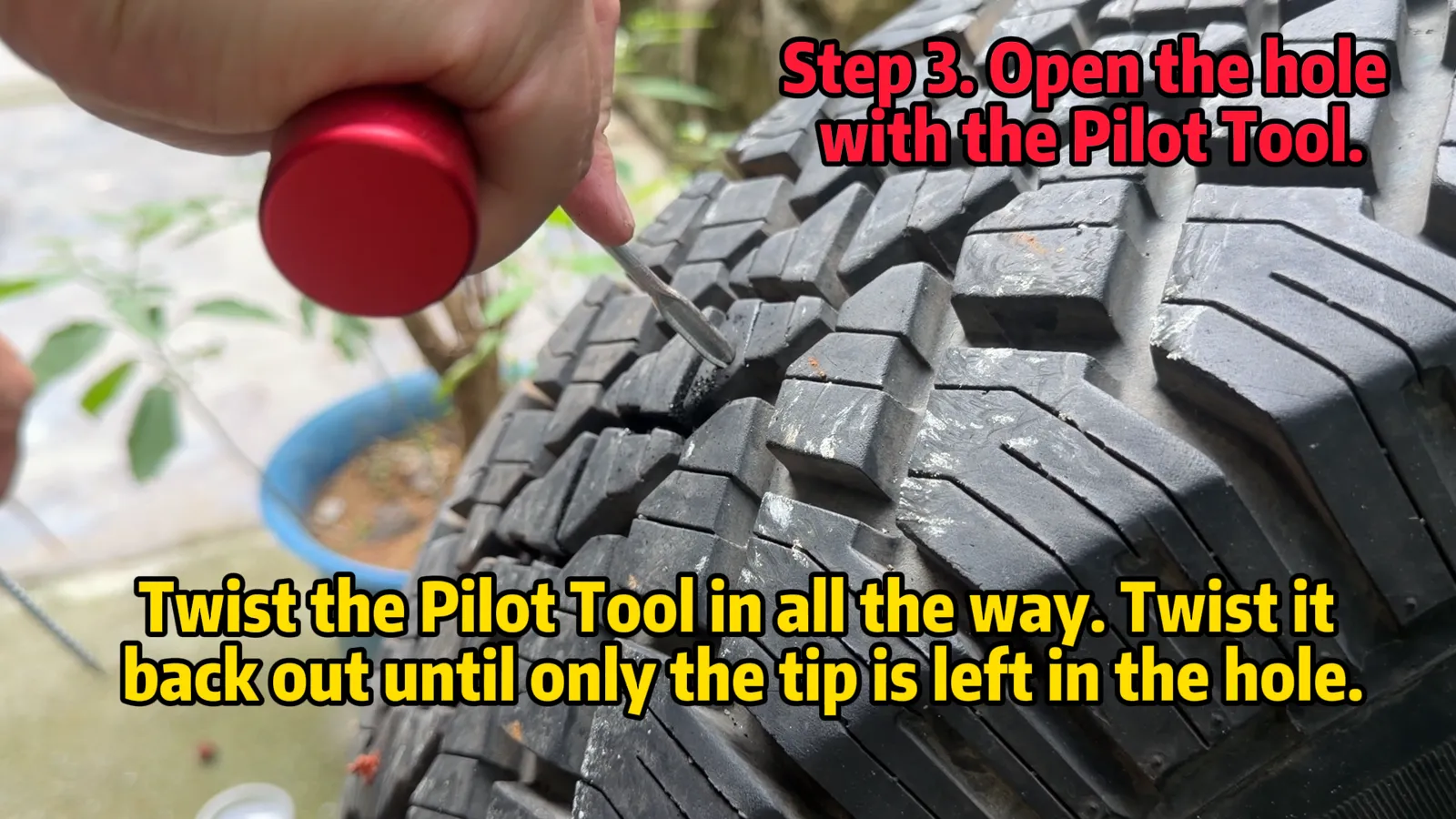
Step 4: Enlarge the hole with the Spiral Probe
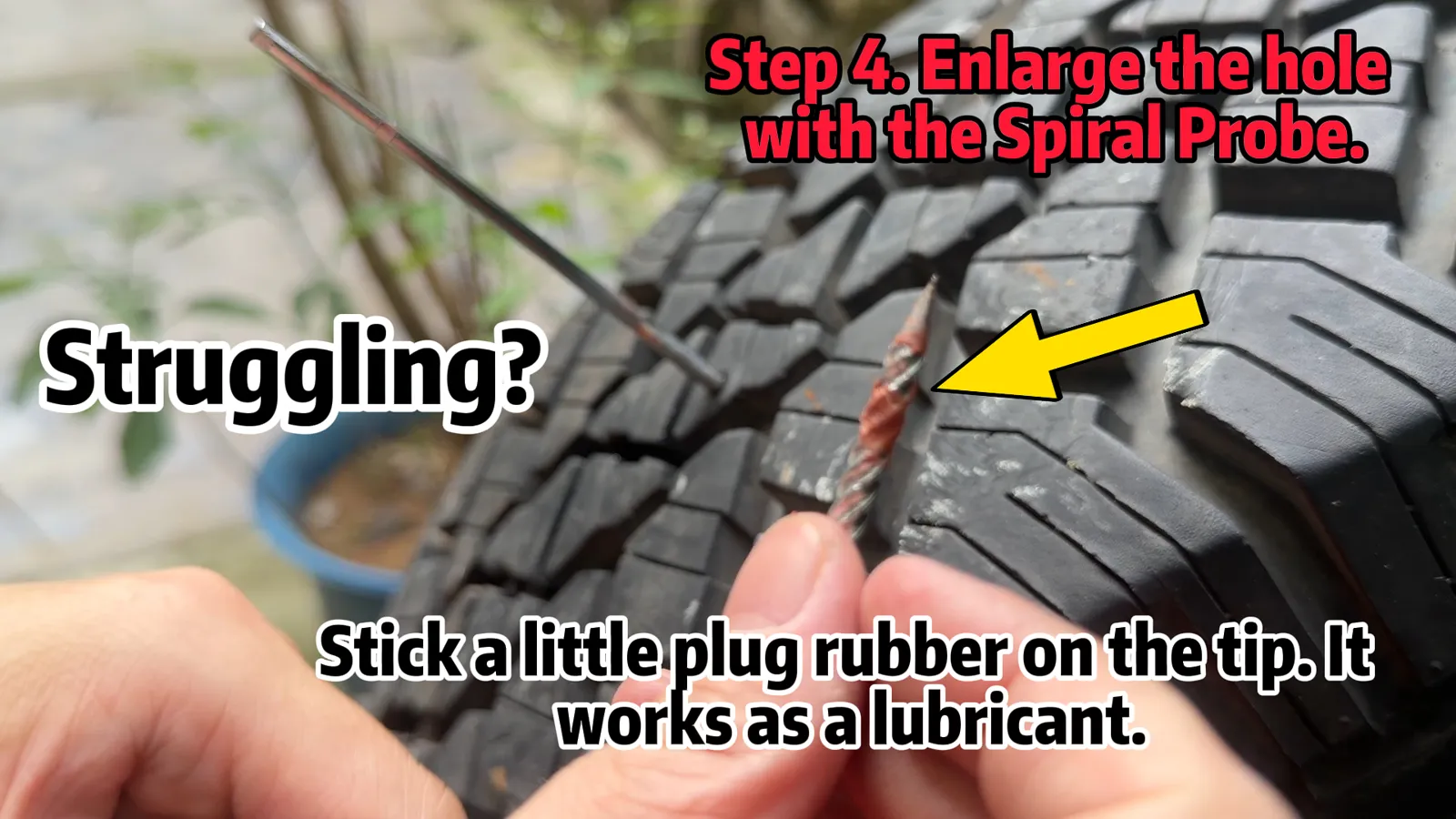
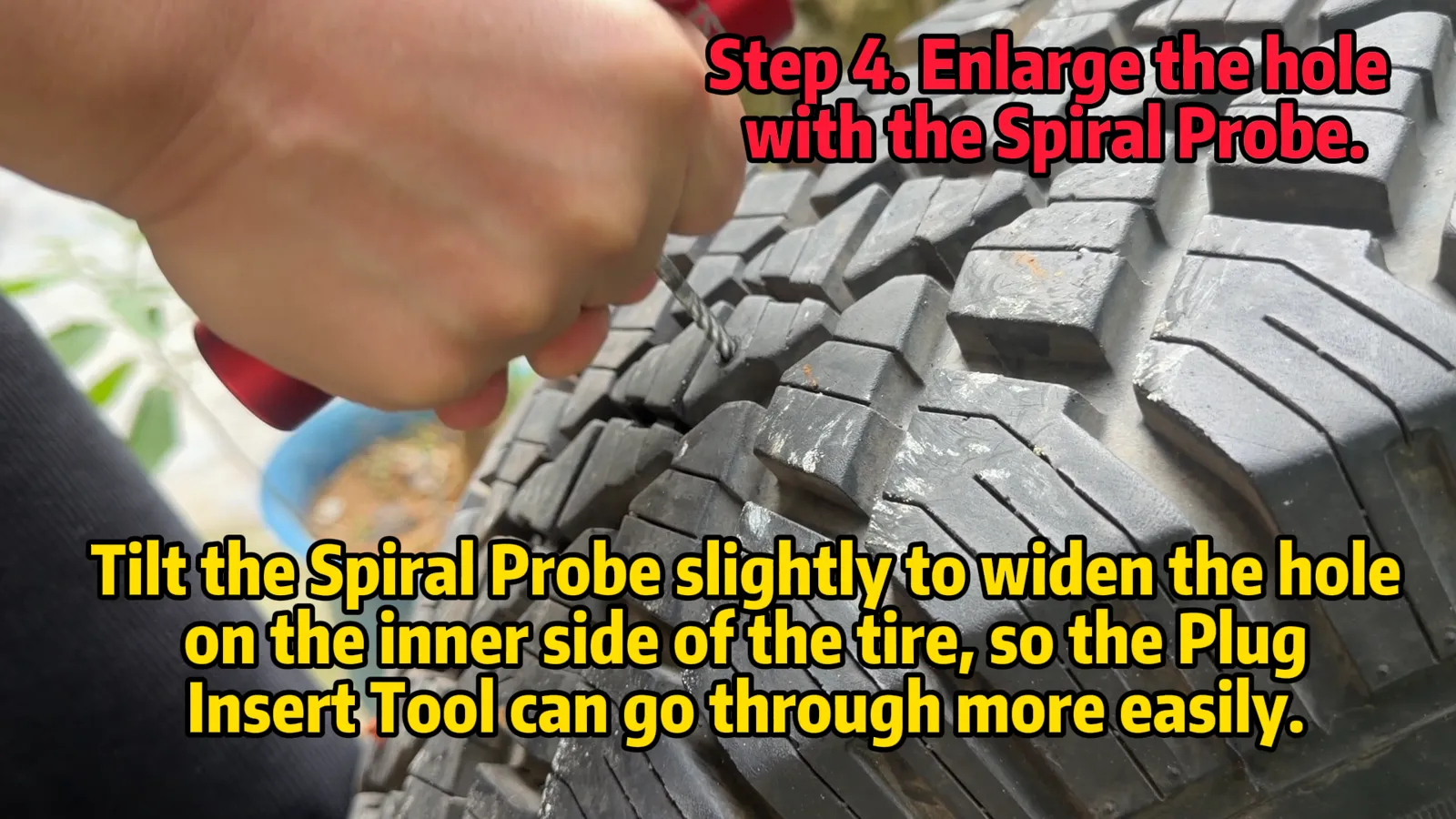
Switch back to the Spiral Probe and push it in and out repeatedly until you can do it fairly easily with one hand. This is the step that makes the plug go in smoothly later, so don't rush it.
- Too hard to push? Take a little rubber from the end of a plug and stick it on the tip of the probe. The rubber works as a lubricant.
- Tilt the probe slightly to widen the hole on the inner side of the tire too, so the Plug Insert Tool can get through.
- The probe gets hot from the friction. If it is too hot to hold comfortably, let it cool down before you continue.
Step 5: Check the hole
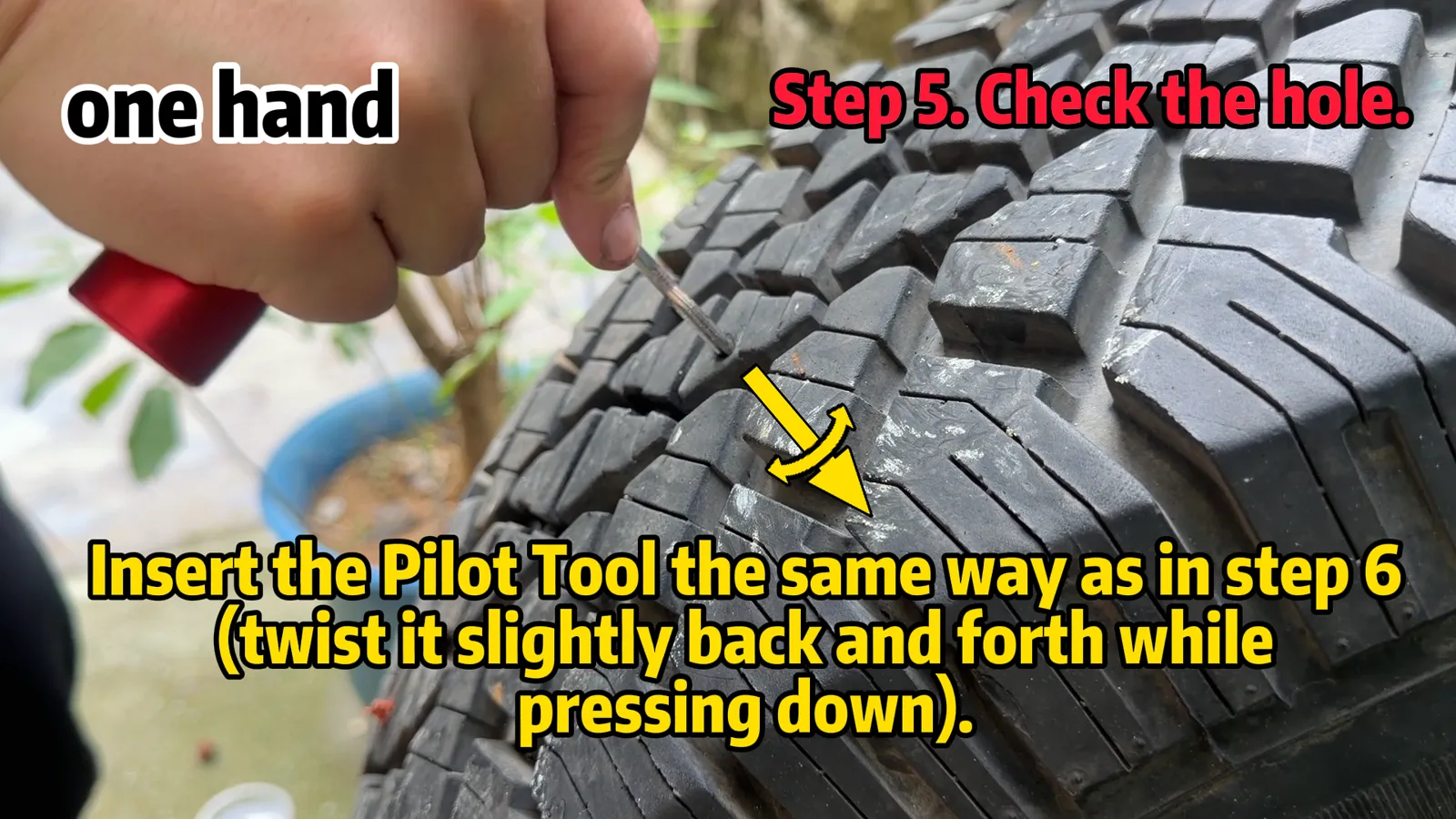
Insert the Pilot Tool the same way you will insert the plug: twist it slightly back and forth while pressing down. If you can push it all the way in with one hand, the hole is ready. If not, repeat step 4 and check again. This quick test saves you from fighting the plug in the next step.
Step 6: Insert the plug
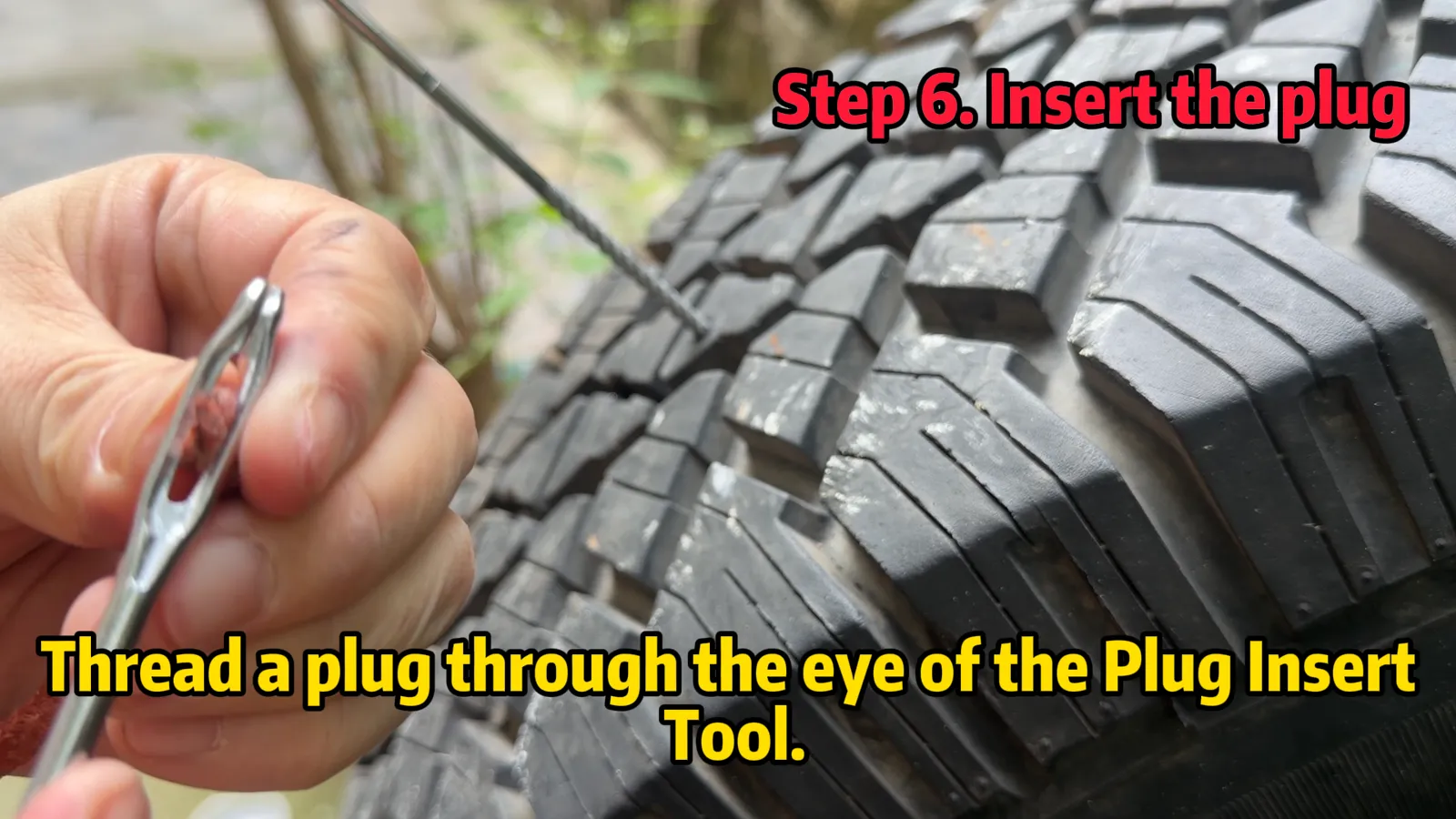
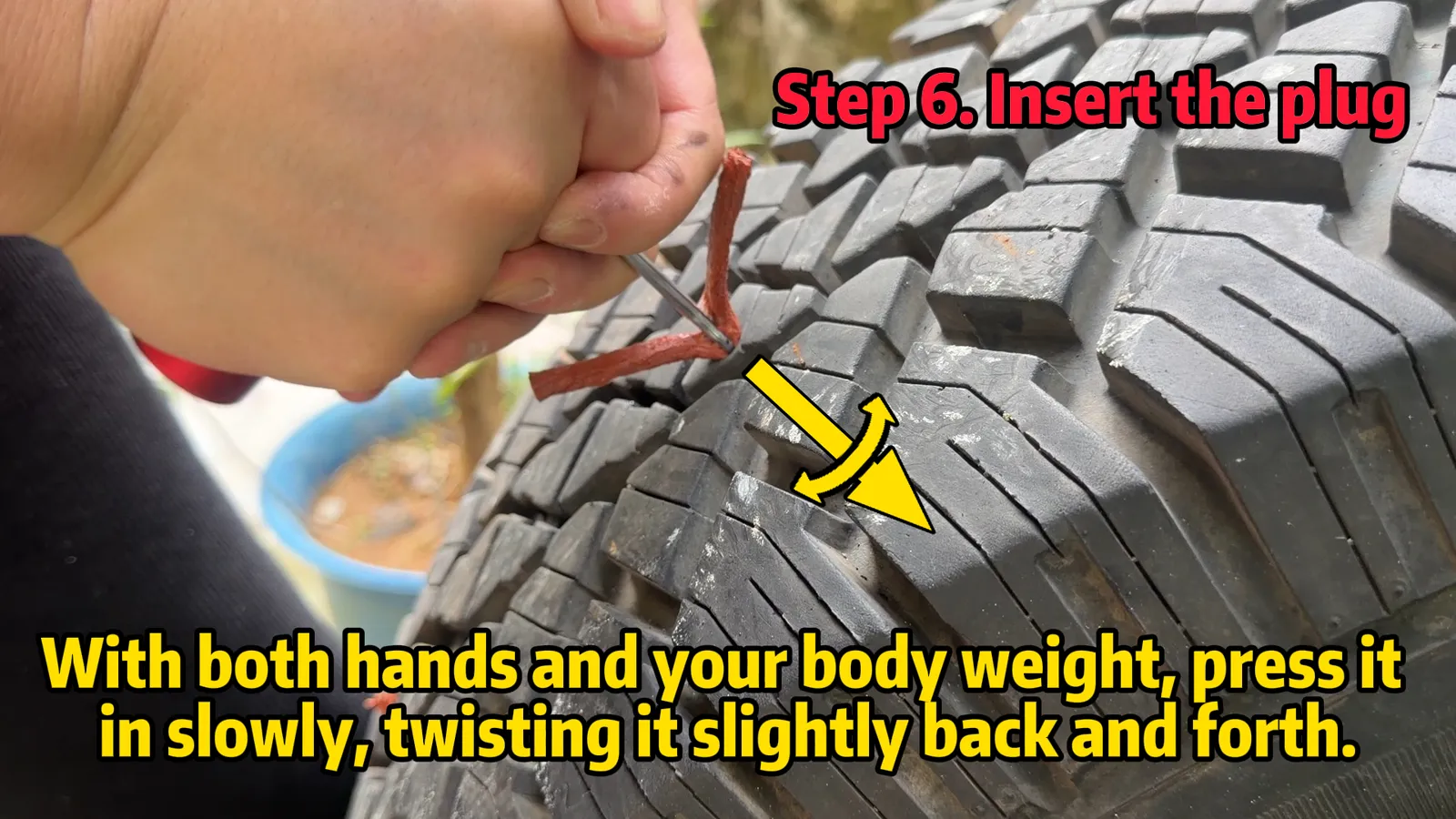
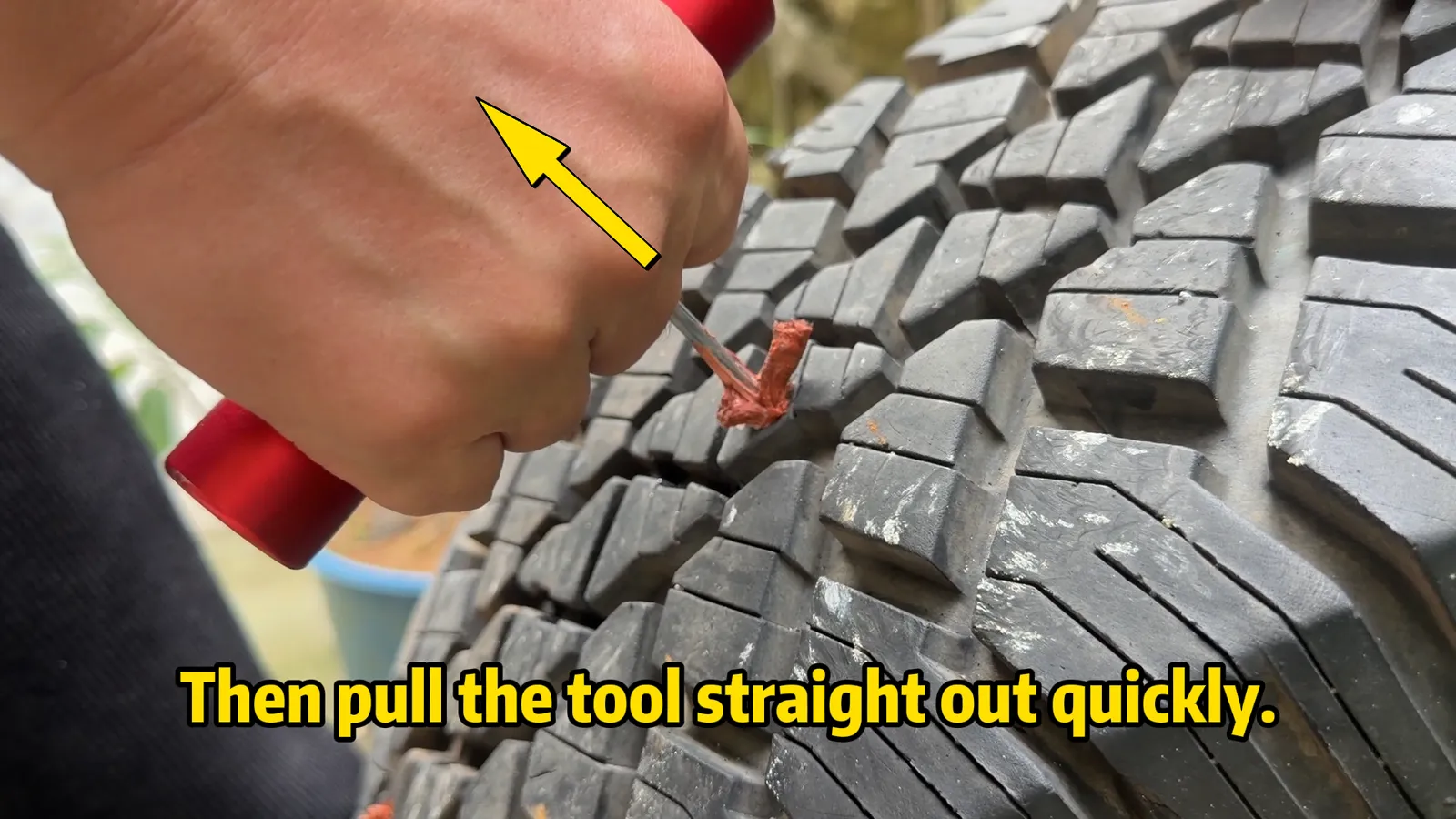
Thread a plug through the eye of the Plug Insert Tool and fold the ends back so they don't block your view. With both hands and your body weight, press it in slowly, twisting it slightly back and forth. Keep the pressure straight in line with the hole. Push it all the way in, with about 1-2 cm (1/2 in) of plug left outside, then pull the tool straight out quickly. The plug stays in the tire.
If it won't go in, a cord inside the tire may be in the way: go back to step 4. Don't force it, or the Plug Insert Tool may bend.
Step 7: Trim, inflate and check
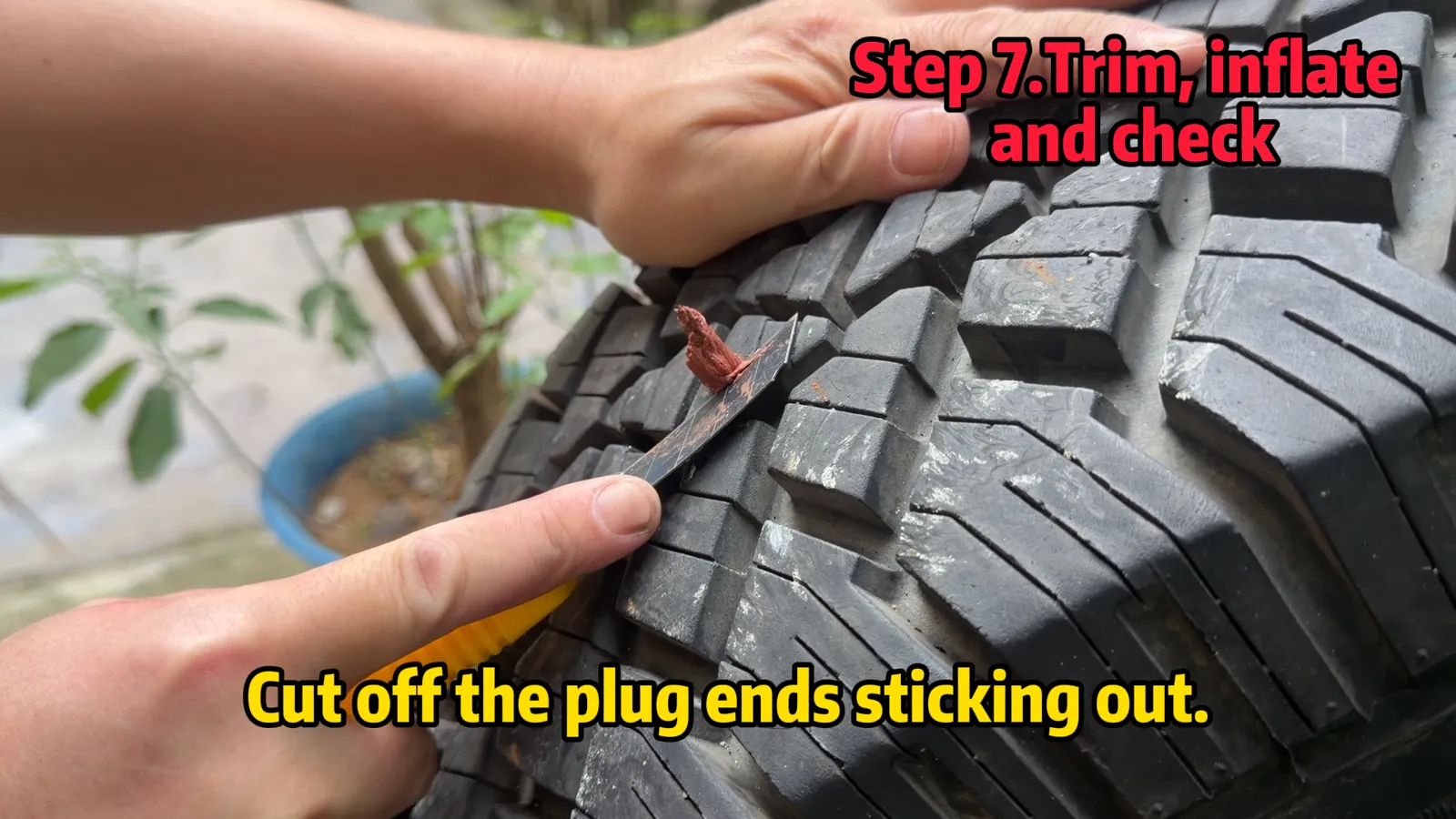
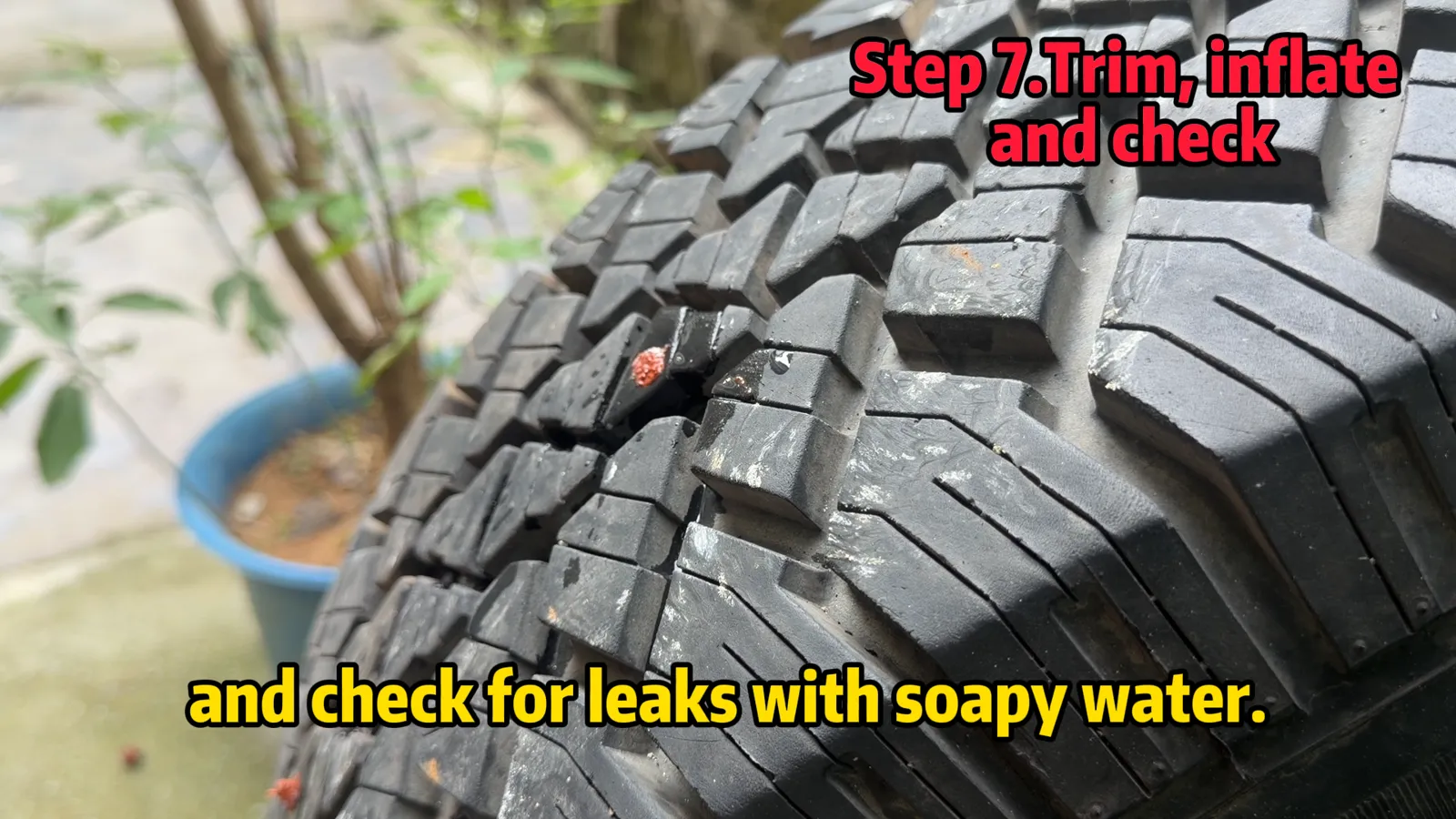
Cut off the plug ends sticking out. Inflate the tire to its normal pressure, then spray or pour soapy water over the plug. Bubbles mean it is still leaking: repeat the repair with a new plug. No bubbles: you're done. Not sure the plug has sealed? Inflate and check with soapy water before you trim, then check again after trimming.
Motorcycles, ATVs, Motor Scooters, Mopeds and Other Thin Tires
Thin tires are much easier. You can usually skip steps 3 and 5 (the Pilot Tool): ream the hole with the Spiral Probe, then insert the plug. In our tests the plug went in easily without the Pilot Tool.
ATV tires are thin like motorcycle tires, so you can usually skip the Pilot Tool too. If the plug is hard to push in, use it. UTV (side-by-side) tires are much thicker: use the Pilot Tool, as on off-road tires.
Common Mistakes
- Forcing the plug into a hole that is too tight. This is how insert tools bend. If the Pilot Tool does not go in with one hand, the hole is not ready yet.
- Pushing at an angle. Keep the pressure straight in line with the hole, or the tool slips and the plug goes in crooked.
- Leaving too little plug outside, or pushing it all the way through. Leave about 1-2 cm (1/2 in) outside before you pull the tool out.
- Working on a completely flat tire. The tire gives way when you press. Leave some air in if you can, or pump a little in first.
- Skipping the leak check. Always check with soapy water after inflating.
- Plugging the sidewall or the shoulder. A plug is for the tread only.
After the Repair
- Drive slowly for a short distance, stop, and check the pressure and the plug again with soapy water.
- Keep an eye on the pressure over the next few days.
- A plug is a roadside and trail repair. The tire industry (USTMA) does not count a plug alone as a permanent repair: have the tire checked by a tire shop, which can repair it from the inside or tell you if it needs replacing.
Safety
- Wear eye protection and keep your face away from the hole: air, rubber and grit can come out.
- Park safely, away from traffic, with the parking brake on.
- Only for punctures up to about 6 mm (1/4 in) in the tread area.
About the Kit in This Guide
- Less force: the 28 mm handle is thicker than most pocket kits, so you can push and twist harder with less effort.
- Pilot Tool opens the hole: it stretches the hole before the plug goes in, so you spend less effort reaming and the plug slides in instead of fighting a tight hole.
- Check before you plug: if the Pilot Tool goes all the way in, the plug will too. It helps first-timers get it right on the first try.
- Pocket-size: all three tools and 5 plugs pack into the red aluminum handle itself, just 128 mm long and 120 g.
Frequently Asked Questions
Can I plug a tire myself?
Yes. With a plug kit, a nail or screw hole in the tread can be plugged at the roadside in about 7–10 minutes (3–4 minutes on a motorcycle or scooter). You need the kit, a way to inflate the tire, and a little body weight on thick tires.
Do I need to take the wheel off?
Usually not. Rotate the wheel so the puncture is near the top, where you can push down on the tools. It is also easier with some air still in the tire. For a rear tire, you may need to take the wheel off.
Why won't the plug go in, even when I push hard?
Usually the hole isn't reamed enough. Ream it again with the Spiral Probe until it goes in and out with one hand, without much force, then check with the Pilot Tool. Also make sure the puncture is near the top of the tire so you can push with your body weight, and leave some air in the tire: a flat tire gives way when you push.
Can I plug a hole in the sidewall?
No. The sidewall flexes with every turn of the wheel and has no steel belt to hold a plug, so a plug there will not last and the tire can fail. Sidewall damage needs a tire shop or a new tire.
How big a hole can a plug fix?
Punctures up to about 6 mm (1/4 in) in the tread area. Larger holes, cuts and tears are not suitable for a plug.
Is a plug a permanent repair?
A plug is a roadside and trail repair: it gets you back on the road. For a permanent repair, have the tire checked by a tire shop, which can repair it from the inside or tell you if it needs replacing.
Can I drive on the highway after plugging a tire?
First drive slowly for a short distance, stop, and check the pressure and the plug again with soapy water. If it holds, you can continue, but have the tire checked by a tire shop as soon as you can, especially before long high-speed trips.
Do I need an air pump?
Yes. A plug kit closes the hole but does not add air. Carry a 12 V compressor or a hand pump to bring the tire back to its normal pressure.
What if there are several holes?
Each puncture needs its own plug. If there are several holes, or they are close together, plug them to get home and have a tire shop decide whether the tire can be kept.